ERP Development: Building Integrated Business Management Solutions for Growth
Managing multiple business operations efficiently is one of the biggest challenges for growing organizations. Different departments often rely on separate systems for finance, inventory, sales, human resources, procurement, and customer management, leading to disconnected data, repetitive work, and slower decision-making.
Enterprise Resource Planning (ERP) development helps businesses unify these operations into a single centralized platform. A custom ERP solution enables organizations to automate workflows, improve collaboration between departments, and gain real-time visibility into business performance, helping leaders make informed decisions with confidence.
A modern ERP system empowers businesses to streamline operations, improve productivity, and build a strong foundation for sustainable growth.
What is ERP Development?
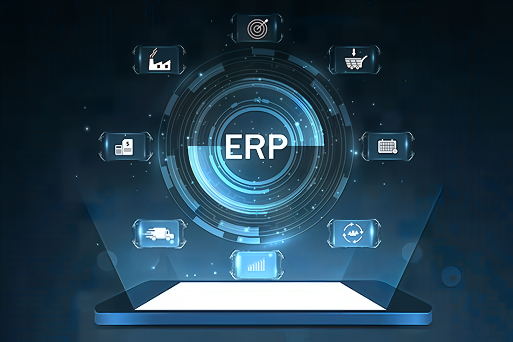
ERP (Enterprise Resource Planning) development is the process of designing and building software that integrates multiple business functions into one unified system. Instead of managing separate applications for accounting, HR, inventory, and sales, businesses can control everything from a single dashboard.
A custom ERP solution is designed around your organization's workflow, making operations more efficient, scalable, and easier to manage.
Why Businesses Need Custom ERP Solutions
Every business has unique operational requirements that standard ERP software may not fully support. Custom ERP development allows organizations to build solutions tailored to their business processes while improving efficiency across departments.
A custom ERP system can help manage:
- Finance and Accounting Management — Manage financial operations, invoices, taxation, expenses, and financial reporting
- Inventory and Supply Chain Management — Monitor inventory, warehouse operations, procurement, and supply chain activities
- Human Resource Management — Handle employee records, payroll, attendance, and performance management
- Sales and Customer Relationship Management — Track customers, sales activities, quotations, and order management
- Project and Task Management — Organize projects, assign tasks, and monitor team productivity
- Procurement and Vendor Management — Manage purchasing workflows, suppliers, and vendor communications
- Business Reports and Analytics — Generate real-time reports and dashboards for smarter business decisions
By integrating these modules into one platform, businesses eliminate data duplication, reduce manual work, and improve collaboration across teams.
Key Features of Modern ERP Software
1. Centralized Data Management
Store all business information in one secure database, allowing every department to access accurate and up-to-date information.
2. Workflow Automation
Automate repetitive tasks such as invoice generation, purchase approvals, inventory updates, and employee management to improve productivity.
3. Real-Time Analytics & Dashboards
Interactive dashboards provide instant insights into business performance, helping management make faster and better decisions.
4. Inventory & Resource Management
Monitor inventory levels, warehouse operations, procurement, and resource utilization in real time.
5. Finance & Accounting
Manage billing, expenses, taxation, payroll, and financial reporting through a single integrated system.
6. Cloud Accessibility
Access ERP software securely from anywhere using cloud infrastructure, enabling remote work and multi-location business operations.
ERP Development Process
1. Business Requirement Analysis
Understand business workflows, operational challenges, and future growth plans.
2. ERP Planning & Architecture
Design scalable system architecture and identify required modules.
3. UI/UX Design
Create an intuitive interface that makes ERP software simple and efficient for daily business operations.
4. Module Development
Develop core ERP modules such as Finance, HRM, CRM, Inventory, Procurement, and Reporting.
5. Integration
Connect ERP with payment gateways, third-party APIs, accounting software, mobile applications, and existing business systems.
6. Testing & Quality Assurance
Perform functional, security, and performance testing to ensure a reliable business solution.
7. Deployment & Maintenance
Deploy the ERP platform and provide continuous updates, monitoring, and technical support.
Technologies Used for ERP Development
Modern ERP solutions are built using scalable technologies such as:
- Flutter — Cross-platform mobile ERP application development
- React.js — Dynamic and responsive web application development
- Angular — Enterprise-grade front-end application development
- Node.js — High-performance backend services and APIs
- Laravel — Secure and scalable PHP ERP development framework
- ASP.NET — Enterprise business application development
- Java Spring Boot — Robust backend architecture for large-scale ERP systems
- MySQL — Reliable relational database management
- PostgreSQL — Advanced enterprise database solution
- MongoDB — Flexible NoSQL database for scalable applications
- AWS — Cloud infrastructure and hosting services
- Microsoft Azure — Enterprise cloud platform and deployment
- Google Cloud Platform — Secure cloud services for ERP applications
Benefits of ERP Development
A well-designed ERP system provides significant business advantages:
- Improved Operational Efficiency — Streamline business processes through centralized automation
- Centralized Business Management — Manage all departments using a single integrated platform
- Better Collaboration Between Departments — Improve communication and information sharing across teams
- Reduced Manual Work and Paperwork — Eliminate repetitive tasks and minimize operational errors
- Accurate Reporting and Analytics — Generate real-time reports for better business decisions
- Improved Inventory Management — Monitor stock, procurement, and warehouse activities efficiently
- Enhanced Financial Control — Simplify accounting, budgeting, and financial management
- Scalable Business Growth — Expand operations with a flexible ERP platform
- Higher Employee Productivity — Enable teams to work faster using automated workflows
- Faster Decision-Making — Access real-time business insights whenever needed
ERP is more than software—it's a complete business management ecosystem that helps organizations operate efficiently and grow sustainably.
Industries That Use ERP Solutions
ERP software is widely used across industries to improve operational efficiency and business management.
- Manufacturing — Production planning, inventory, and quality management
- Healthcare — Patient records, billing, and hospital administration
- Retail & E-commerce — Inventory, sales, customer, and order management
- Logistics & Supply Chain — Fleet management, warehouse operations, and shipment tracking
- Education — Student management, admissions, payroll, and administration
- Construction — Project planning, procurement, and resource management
- Real Estate — Property management, sales tracking, and financial reporting
- Finance — Accounting, compliance, and business reporting
- Hospitality — Hotel operations, reservations, and customer management
- Agriculture — Farm operations, inventory, procurement, and production management
Future of ERP Technology
ERP technology continues to evolve with the adoption of Artificial Intelligence, cloud computing, automation, and advanced analytics.
Modern ERP platforms now include AI-powered forecasting, predictive analytics, intelligent workflow automation, chatbot support, and real-time business intelligence. Cloud-based ERP solutions also provide greater flexibility, improved security, and easier scalability for growing businesses.
Organizations investing in next-generation ERP systems gain a competitive advantage by improving operational efficiency while preparing for future digital transformation.
Why Choose Vriksha Techno Solutions for ERP Development?
At Vriksha Techno Solutions, we develop customized ERP solutions tailored to your business processes. Our ERP platforms are secure, scalable, and designed to simplify complex operations while improving productivity across every department.
Our ERP development services include:
- Custom ERP Development
- Cloud-Based ERP Solutions
- CRM & HRM Integration
- Inventory Management Systems
- Financial Management Modules
- Third-Party API Integration
- Mobile ERP Applications
- Ongoing Support & Maintenance
Ready to transform your business operations? Talk to our team →
Frequently Asked Questions
What is ERP software?
ERP software integrates finance, HR, inventory, sales, and procurement into a centralized business management platform.
How long does ERP development take?
The development timeline depends on project complexity, required modules, and business requirements.
Can ERP integrate with existing business software?
Yes. ERP systems can integrate with CRM, HRM, payment gateways, APIs, accounting software, and third-party applications.
Is cloud ERP secure?
Yes. Cloud ERP solutions use enterprise-grade security, encryption, and regular backups to protect business data.
Can ERP software grow with my business?
Absolutely. Custom ERP systems are built to scale as your organization expands.
Ready to Build Your Next Digital Product?
Our experts will respond within 24 hours with a tailored approach for your project.